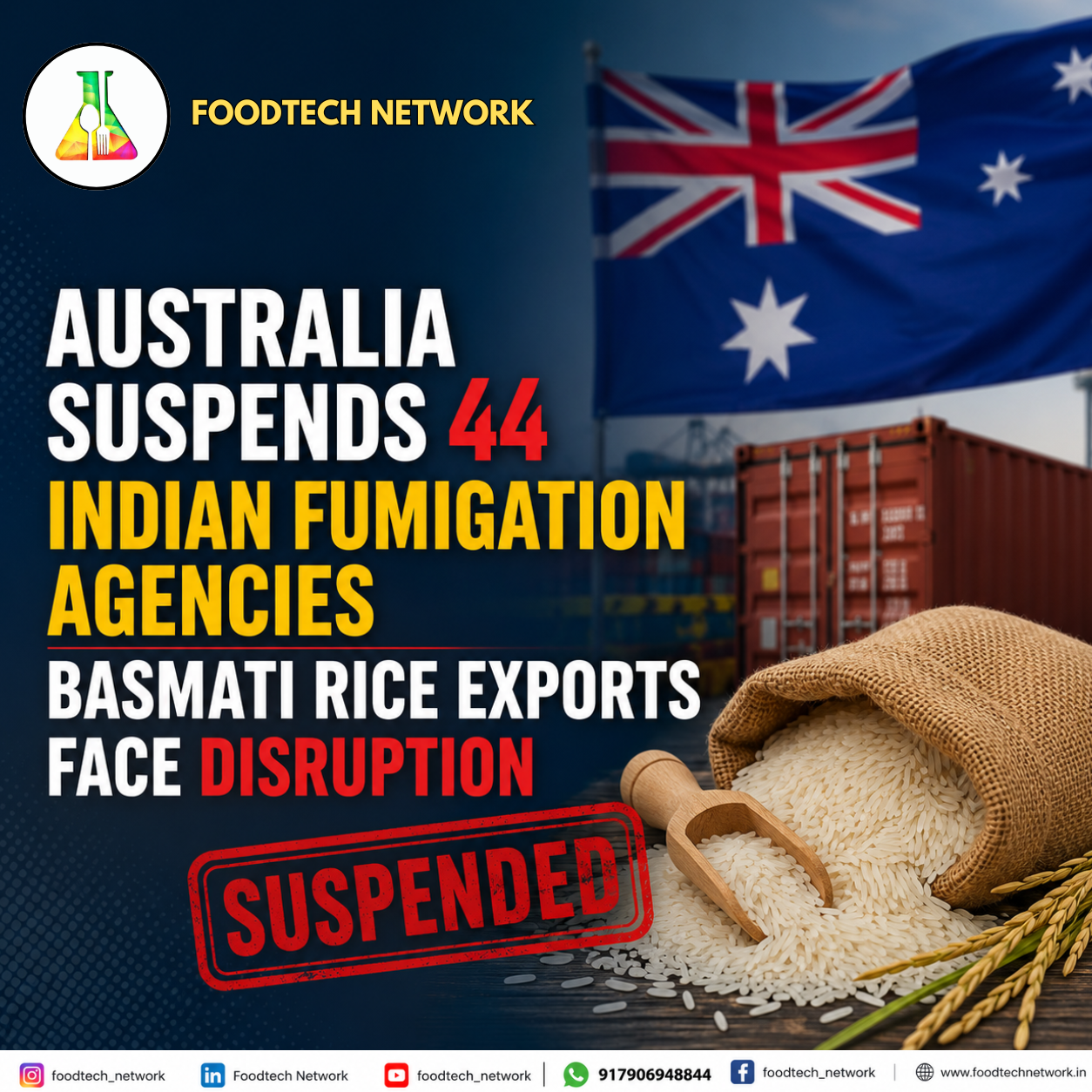
Australia has suspended the licences of 44 Indian fumigation agencies, including five from Haryana and three from Punjab, following a biosecurity compliance audit. The move is expected to significantly impact India’s basmati rice exports, with more than 100 containers worth approximately ₹200 crore facing possible delays, re-fumigation, or rejection.
The suspension affects nearly 60% of the Indian fumigation agencies authorised to certify agricultural consignments destined for Australia, raising concerns across the country’s rice export industry.
No Ban on Indian Basmati Rice
Industry experts have clarified that Australia has not banned imports of Indian basmati rice. The action is directed solely at certain fumigation service providers whose certification practices reportedly failed to meet Australia’s strict biosecurity standards.
The issue is related to fumigation documentation and compliance, not the quality, safety, or standards of Indian basmati rice.
Why Australia Took Action
The suspension follows an audit conducted by the Australian Department of Agriculture, Fisheries and Forestry under the country’s Biosecurity Act 2015, one of the world’s most stringent import control frameworks.
According to industry sources, Australian auditors identified inconsistencies in certification records, including cases where documentation suggested that consignments had been packed before the recorded fumigation date. Such discrepancies raised concerns about the integrity of the fumigation process and the possibility of pest re-infestation during post-treatment handling.
Australian authorities require complete traceability throughout the export process, including:
- Accurate fumigation timing
- Gas concentration records
- Temperature and exposure details
- Proper documentation
- Secure post-treatment handling
- Full supply chain traceability
Failure to meet these standards can result in suspension of accreditation.
More Than 100 Containers Affected
Exporters estimate that over 100 containers of basmati rice, valued at around ₹200 crore, may now face disruptions.
Affected shipments could encounter:
- Delays at Australian ports
- Mandatory re-fumigation upon arrival
- Higher logistics costs
- Additional compliance inspections
- Potential rejection if certification requirements are not met
Exporters may also incur re-fumigation costs ranging from USD 700 to USD 1,200 per container, depending on Australian quarantine requirements.
India’s Basmati Exports Continue to Grow
Despite the current challenge, Australia remains an important premium destination for Indian basmati rice.
Between June 2025 and May 2026, India exported:
- 72,422 metric tonnes of basmati rice to Australia
- Export value of ₹734.87 crore
During the previous corresponding period (June 2024–May 2025), exports stood at:
- 60,177 metric tonnes
- Worth ₹607.23 crore
The figures indicate steady growth in India’s basmati exports to Australia.
Overall, India’s exports to Australia during the last financial year were valued at approximately USD 520 million, with:
- Basmati rice contributing USD 79 million
- Processed food products contributing USD 75 million
- Spices contributing USD 73 million
Exporters React
Ranjit Singh Jossan, Vice-President of the Basmati Rice Millers and Exporters Association, stated that exporters had complied with all prescribed export procedures and that the issue lies with the certification process rather than exporters themselves.
He noted that exporters rely on government-approved fumigation agencies to certify consignments destined for Australia and have become unintended victims of regulatory action resulting from compliance deficiencies within the certification system.
Jossan also warned that Australia’s decision could influence how other developed importing nations assess India’s export compliance systems, given Australia’s reputation for maintaining rigorous biosecurity standards.
Need for Stronger Compliance Framework
Industry representatives believe the incident highlights the importance of strengthening India’s fumigation certification and compliance systems to align with evolving international biosecurity requirements.
Australia operates the Australian Fumigation Accreditation Scheme, under which overseas fumigation agencies undergo technical evaluations, training, and regular audits. Accreditation remains subject to continuous monitoring and can be suspended if agencies fail to maintain compliance.
Exporters are now urging authorities to work closely with Australian regulators to resolve certification issues quickly and minimise disruptions to India’s premium basmati rice exports.
Conclusion
Australia’s suspension of 44 Indian fumigation agencies is a regulatory compliance issue rather than a food safety concern. While Indian basmati rice exports remain permitted, the move could temporarily disrupt shipments, increase export costs, and place additional pressure on exporters serving one of the world’s most demanding agricultural import markets.
The development underscores the growing importance of robust certification systems, transparent documentation, and internationally compliant fumigation practices in maintaining India’s reputation as the world’s leading exporter of premium basmati rice.
📢 Be Aware, We never charge any consultancy fee for jobs.
📲 Foodtech Network WhatsApp Jobs Group
Click to join the WhatsApp group
👥Free Membership (For Jobs, Internship and Training)
Membership registration
⚙️ Food Entrepreneurs & Startups (For business owners)
Our services (Free and Paid)
📱 Food safety training and certification.
Check our training portal and enroll now