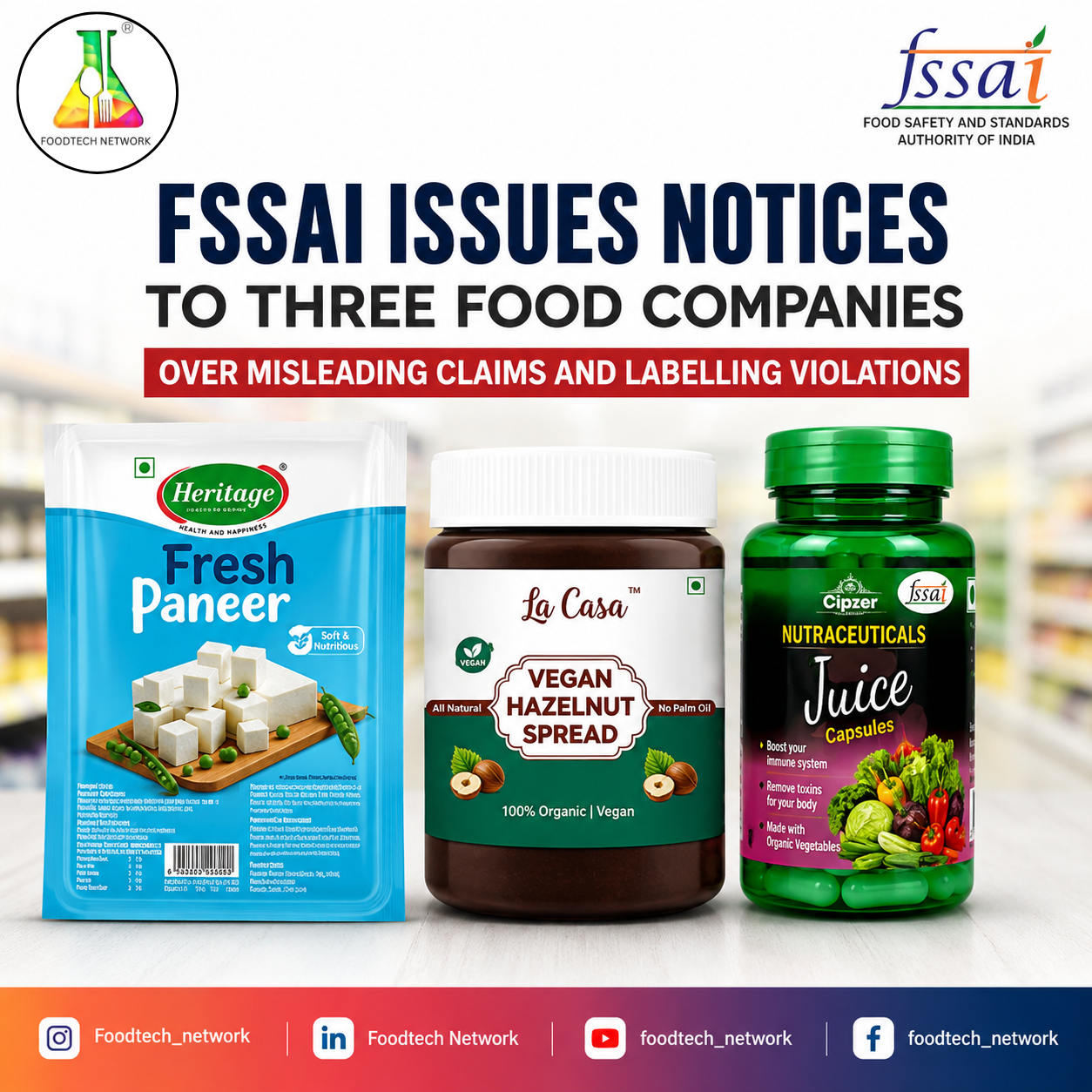
The Food Safety and Standards Authority of India (FSSAI) has issued notices to three food business operators (FBOs)—Heritage Foods Limited, Dia Foods, and Cipzer—for alleged violations of the Food Safety and Standards (FSS) Act, 2006 related to misleading food claims and improper product labelling.
According to the regulator, the companies have been directed to submit their explanations within seven days and take corrective measures to ensure compliance with the Food Safety and Standards Act, 2006, along with the applicable Rules and Regulations.
Heritage Foods Limited Pulled Up Over “Fresh Paneer” and “Healthy” Claims
FSSAI issued a notice to Heritage Foods Limited regarding its Heritage Fresh Paneer product after observing claims that allegedly do not comply with the Food Safety and Standards (Advertising and Claims) Regulations, 2018.
Key observations by FSSAI:
- The product uses the term “Fresh Paneer”, which, according to FSSAI, does not satisfy the conditions prescribed under Schedule V for the use of the word “Fresh.” The regulator stated that the claim may mislead consumers regarding the nature of the product.
- FSSAI also objected to the use of the word “Healthy” in the trademark “Healthy Happiness.” The authority noted that such wording may create the impression that the product inherently promotes or improves health, making the claim potentially misleading under Regulation 8(3) of the Food Safety and Standards (Advertising and Claims) Regulations, 2018.
Dia Foods Receives Notice Over “All Natural”, “100% Organic” and “Vegan” Claims
FSSAI also issued a notice to Dia Foods over its La Casa Vegan Hazelnut Chocolate Spread, citing multiple labelling and advertising concerns.
Key observations by FSSAI:
- The claim “All Natural” was found to be non-compliant with the conditions prescribed for using the word “Natural.”
- The product carries claims such as “100% Organic” and “Vegan”, despite not obtaining prior approval for organic food and vegan food endorsement under its FSSAI licence.
- FSSAI further observed that the use of the term “100% Organic” is misleading because the expression “100%” is not defined or recognised under the Food Safety and Standards Act, 2006, or the Rules and Regulations framed thereunder.
Cipzer Served Notice for Misleading Health and Certification Claims
The regulator also issued a notice to Cipzer concerning its Cipzer Nutraceuticals Juice Capsules, highlighting several alleged violations related to health claims, product representation and labelling.
Key observations by FSSAI:
- The product displays the claim “FSSAI Approved,” which may falsely suggest that the product has received specific approval or endorsement from FSSAI.
- Health benefit claims such as “Boost your immune system” and “Remove toxins from your body” were made without adequate scientific substantiation.
- The packaging features images of vegetables including tomato, cucumber, broccoli, cabbage and coriander, although these ingredients are not declared as ingredients of the product.
- The label mentions the presence of Vitamin C and Vitamin E, but does not provide complete nutritional declarations required under the regulations, including the prescribed contribution towards the Recommended Dietary Allowance (RDA).
- FSSAI also noted that the statement “Made with Organic Vegetables” may mislead consumers because the product does not display the mandatory organic certification marks, including the Jaivik Bharat logo.
FSSAI Directs Companies to Respond Within Seven Days:
In all three cases, FSSAI has instructed the companies to submit a written explanation within seven days, explaining why regulatory action should not be initiated under the provisions of the Food Safety and Standards Act, 2006, and the Rules and Regulations made thereunder.
The authority has also directed the food business operators to review their product labels and marketing claims and ensure strict compliance with the applicable regulatory framework.
The notices issued to Heritage Foods Limited, Dia Foods and Cipzer reflect FSSAI’s continued efforts to strengthen regulatory compliance in India’s food sector. By taking action against misleading claims and labelling violations, the food safety regulator aims to promote greater transparency, ensure truthful product communication and safeguard consumer trust. Food businesses are expected to carefully review their product labels and advertising practices to ensure full compliance with the Food Safety and Standards Act, 2006, and related regulations.
📢 Be Aware, We never charge any consultancy fee for jobs.
📲 Foodtech Network WhatsApp Jobs Group
Click to join the WhatsApp group
👥Free Membership (For Jobs, Internship and Training)
Membership registration
⚙️ Food Entrepreneurs & Startups (For business owners)
Our services (Free and Paid)
📱 Food safety training and certification.
Check our training portal and enroll now