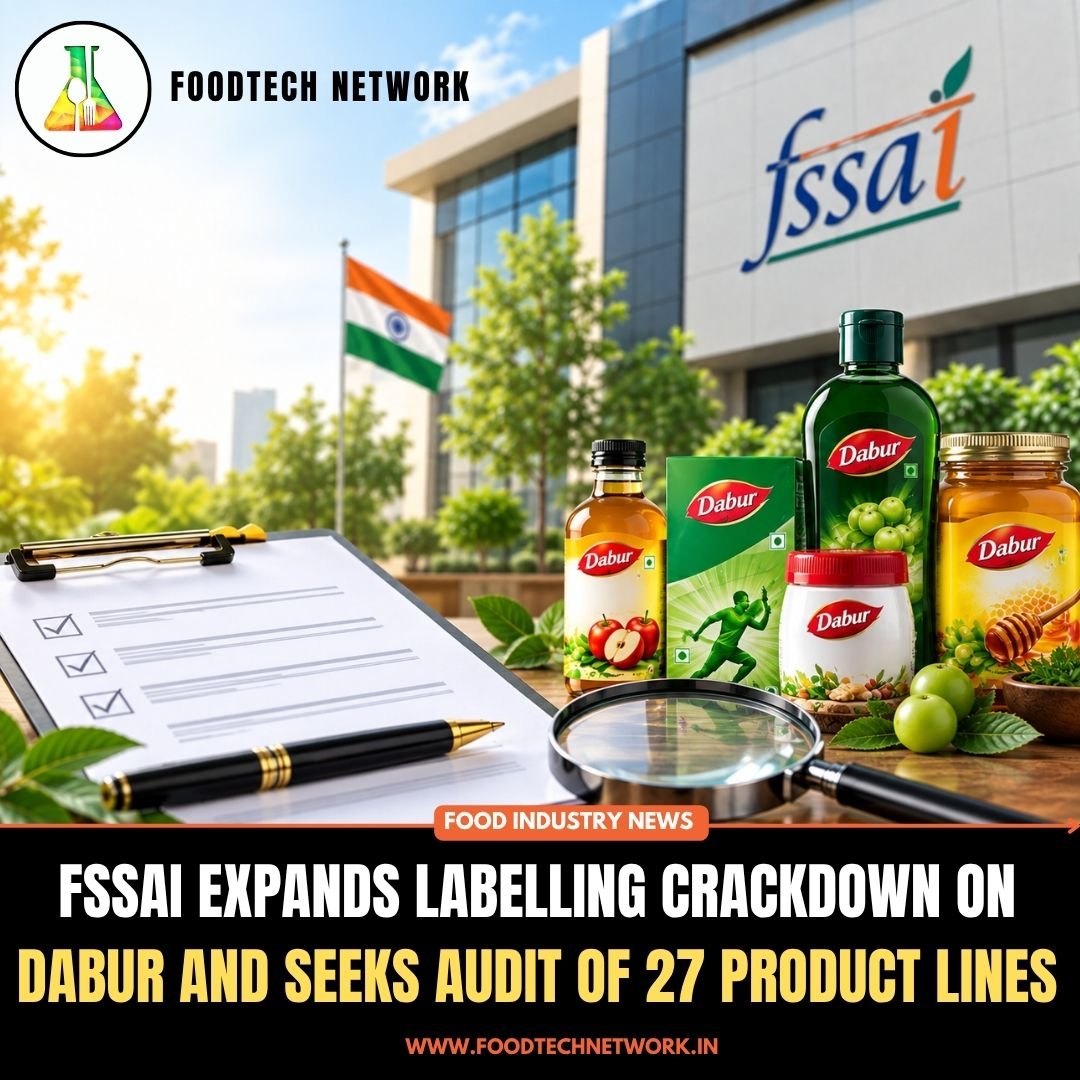
The Food Safety and Standards Authority of India (FSSAI) has expanded its regulatory scrutiny of Dabur India, reportedly seeking a statutory audit covering 27 product lines.
According to a report published on September 17, 2026, FSSAI’s improvement notice dated August 19 covers a wider range of Dabur products, including homemade brands, glucose powders, and direct-to-consumer wellness and nutraceutical products.
The regulator has raised concerns over claims that attribute medicinal or health benefits to certain products, including cold-pressed oils, apple cider vinegar and honey. FSSAI has reportedly asked Dabur to remove or withdraw such claims where required.
The company has also been asked to submit scientific dossiers and peer-reviewed human clinical trial data supporting health and immunity-related claims made for its products.
Dabur Responds
Dabur said the improvement notice was largely related to content displayed on e-commerce platforms. The company stated that it has already submitted its response and action-taken report to FSSAI and is complying with applicable food safety regulations.
The latest action follows earlier FSSAI notices concerning misleading labels, claims and advertisements. In August, FSSAI said several food business operators, including Dabur, had taken corrective measures following regulatory notices. These measures included withdrawing certain claims and revising product packaging.
Scrutiny Over Product Classification
FSSAI has also previously raised a classification issue involving one Dabur product, stating that an Ayurvedic proprietary medicinal oil was being sold as edible oil. Dabur subsequently informed the regulator that it had directed e-commerce platforms to place the product under the appropriate Ayurvedic proprietary medicine category.
100 Per Cent Claims Under Scrutiny
Dabur has also faced regulatory action over food products carrying claims such as “100% Pure”, “100% Natural”, “100% Purity Guaranteed”, “100% Organic” and “100% Tender Coconut Water.”
FSSAI stated that such claims were contrary to the FSS (Advertising & Claims) Regulations, 2018, describing them as ambiguous, unverifiable and potentially misleading to consumers.
The Delhi High Court subsequently stayed the prohibitory order in that matter, with the court observing that Dabur had not been given an opportunity of hearing before the order was passed.
The developments highlight the increasing regulatory focus on food labelling, health claims, product categorisation and advertising compliance across the food and wellness sector.
📢 Be Aware, We never charge any consultancy fee for jobs.
📲 Foodtech Network WhatsApp Jobs Group
Click to join the WhatsApp group
👥Free Membership (For Jobs, Internship and Training)
Membership registration
⚙️ Food Entrepreneurs & Startups (For business owners)
Our services (Free and Paid)
📱 Food safety training and certification.
Check our training portal and enroll now