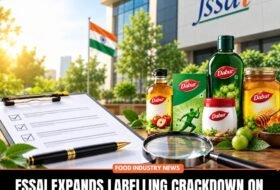
The Delhi High Court has granted interim relief to Dabur India by staying a Food Safety and Standards Authority of India (FSSAI) order that prohibited the company from selling certain food products carrying “100 per cent” claims.
The order, passed by Justice Amit Mahajan on August 7, 2026, follows Dabur’s challenge to the FSSAI action. The court observed that, prima facie, the prohibition order should not have been issued without giving Dabur an opportunity to be heard.
FSSAI Action Against Dabur
Earlier, FSSAI had directed Dabur India to stop the sale of food products carrying claims such as “100% Pure,” “100% Natural,” “100% Purity Guaranteed,” “100% Organic” and “100% Tender Coconut Water.”
The products identified included honey, cow ghee, edible oils, apple cider vinegar, virgin coconut oil, sesame oil, coconut water and coconut milk, among others.
According to FSSAI, such claims were considered ambiguous, unverifiable and potentially misleading to consumers, and were found to be contrary to the Food Safety and Standards (Advertising and Claims) Regulations, 2018.
Dabur Challenges The Prohibition Order
Dabur approached the Delhi High Court arguing that the FSSAI order had been issued without a prior show-cause notice or an opportunity for the company to present its case.
The company also challenged the regulator’s authority to issue the prohibition order and argued that the use of “100%” terminology was common across various food categories.
Court Grants Interim Relief
The High Court found that Dabur had made out a prima facie case for interim relief. The court particularly took note of the absence of a hearing before the FSSAI prohibition order was issued.
The stay means that the FSSAI prohibition order is temporarily kept in abeyance, allowing Dabur to continue selling the affected products while the legal challenge is considered. The interim protection is scheduled to continue until the next hearing, listed for August 24, 2026.
What Happens Next
The Delhi High Court has issued notice to FSSAI and directed the regulator to respond to Dabur’s petition. The dispute will now focus on both the regulatory validity of the prohibition order and the legality of using “100%” claims on food products.
The court’s latest order is an interim decision and does not constitute a final ruling on whether Dabur’s “100%” claims comply with food safety and advertising regulations.