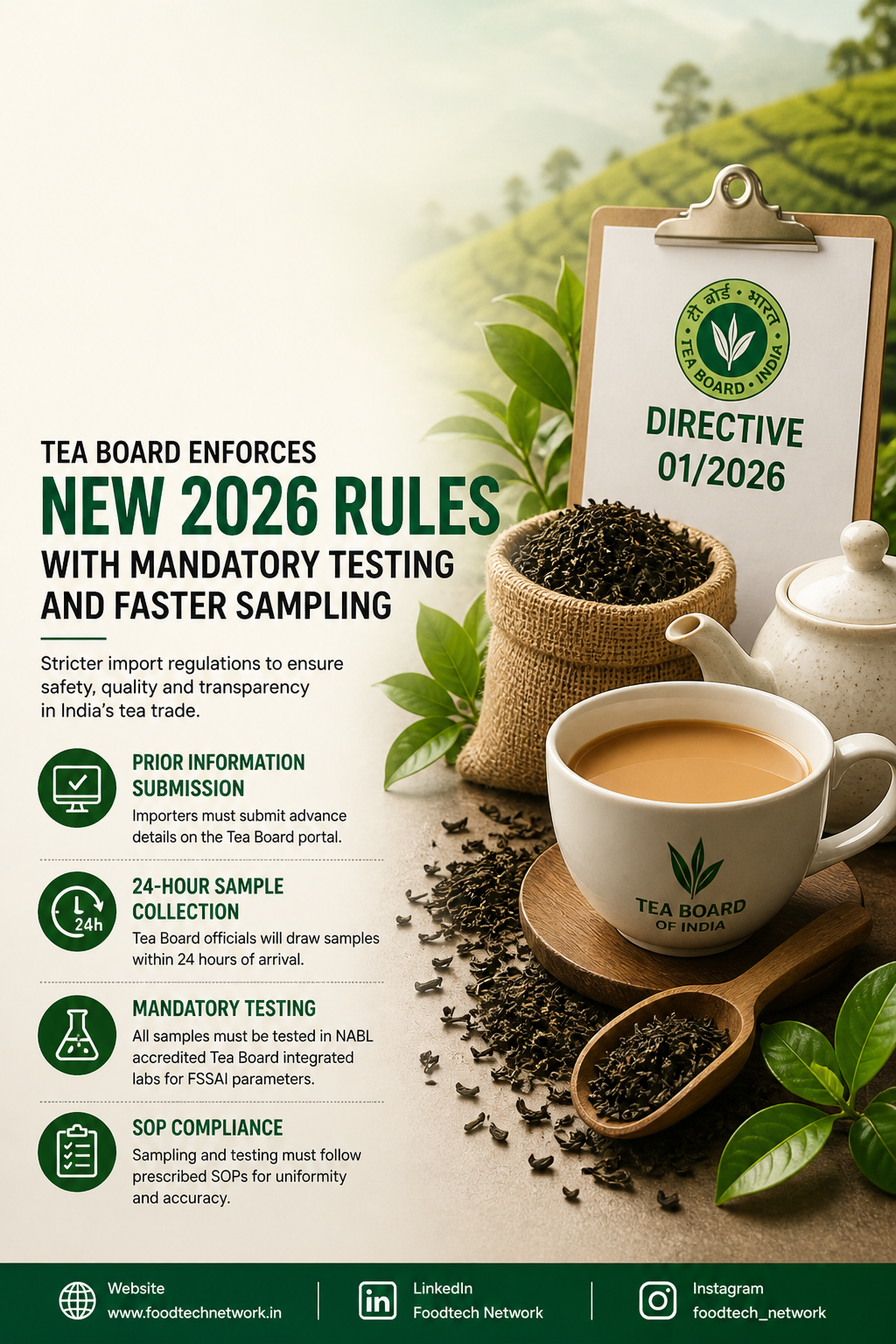
India’s tea regulatory framework has taken a significant step forward as Directive No. 01/2026, issued by the Tea Board of India, is now officially in force from May 2026.
The directive introduces stricter compliance measures for tea imports, focusing on transparency, safety, and global quality standards.
What’s New in the Directive?
The latest regulation mandates tighter control over imported tea consignments entering India. Importers, laboratories, and regulatory bodies must now follow a standardized, time-bound process.
Key Regulatory Changes
🔹 1. Mandatory Pre-Information Submission
Importers must submit advance details of tea consignments on the Tea Board portal before arrival.
👉 This ensures traceability and regulatory preparedness.
🔹 2. 24-Hour Sample Collection Rule
Tea Board officials are required to draw samples within 24 hours of consignment arrival at ports.
👉 This reduces delays and prevents unverified products from entering circulation.
🔹 3. Compulsory Laboratory Testing
All imported tea must undergo testing in NABL-accredited, Tea Board integrated laboratories.
✔ Testing will cover FSSAI parameters
✔ Ensures compliance with food safety standards
✔ Strengthens consumer protection
🔹 4. Standard Operating Procedure (SOP) Compliance
Sampling and testing must strictly follow prescribed SOPs, ensuring uniformity across all ports and regions.
Why This Directive Matters
India is one of the world’s largest tea producers and exporters. With increasing global scrutiny on food safety, this directive aims to:
- Ensure high-quality imports
- Prevent substandard or contaminated tea entry
- Strengthen traceability & accountability
- Align with FSSAI and global safety norms
- Protect the reputation of Indian tea industry
Industry Impact
This move is expected to:
- Increase compliance responsibility for importers
- Boost demand for NABL-accredited testing labs
- Improve inspection efficiency at ports
- Create a more transparent and regulated tea trade ecosystem
However, stakeholders may face initial operational challenges in adapting to tighter timelines and digital reporting requirements.
The implementation of Directive 01/2026 marks a major regulatory upgrade for India’s tea industry. By combining digital reporting, rapid sampling, and mandatory lab testing, the Tea Board is reinforcing India’s commitment to quality, safety, and global competitiveness.
📢 Be Aware, We never charge any consultancy fee for jobs.
📲 Foodtech Network WhatsApp Jobs Group
Click to join the WhatsApp group
👥Free Membership (For Jobs, Internship and Training)
Membership registration
⚙️ Food Entrepreneurs & Startups (For business owners)
Our services (Free and Paid)
📱 Food safety training and certification.
Check our training portal and enroll now