
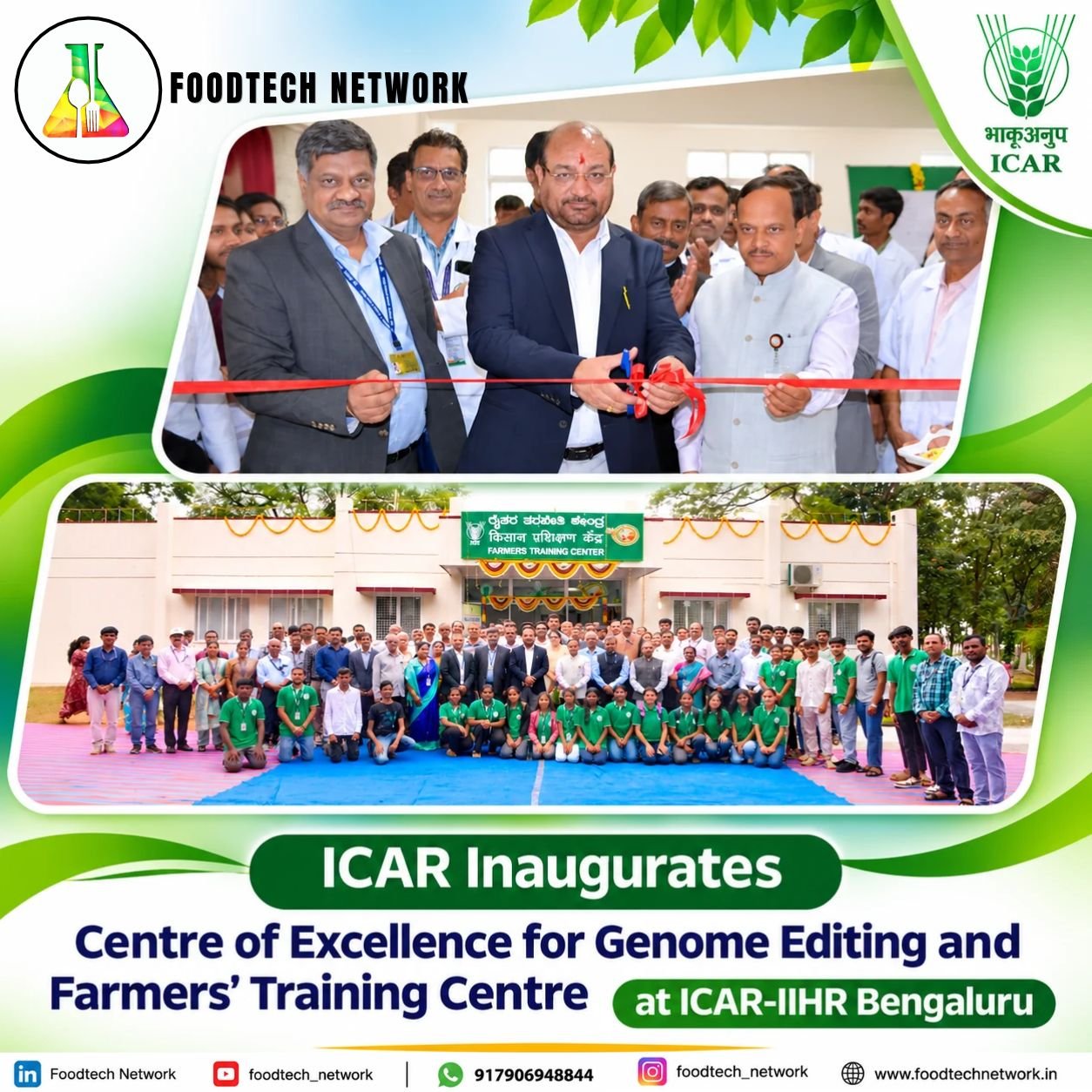
The Indian Council of Agricultural Research (ICAR) has taken a significant step towards strengthening agricultural biotechnology, horticultural innovation and farmer education with the inauguration of two advanced facilities at the ICAR-Indian Institute of Horticultural Research (ICAR-IIHR) in Bengaluru.
Dr. M. L. Jat, Secretary of the Department of Agricultural Research and Education (DARE) and Director General of ICAR, inaugurated the Centre of Excellence for Genome Editing in Horticultural Crops and the Farmers’ Advanced Training Centre on November 15, 2026.
The newly established genome-editing centre includes a Biosafety Level-II (BSL-II) laboratory, designed to support advanced biotechnology research and strengthen India’s capabilities in developing innovative horticultural technologies.
New Genome Editing Centre to Strengthen Horticultural Research
The Centre of Excellence for Genome Editing in Horticultural Crops represents an important development in India’s agricultural research infrastructure.
Equipped with a BSL-II laboratory, the facility will support research in genome-editing technologies and advanced horticultural biotechnology.
During the inauguration, Dr. Jat emphasized the importance of developing self-reliance in genomic resources and strengthening India’s research capabilities to achieve global scientific standards.
He encouraged scientists to prioritize research areas with significant agricultural potential, improve data-driven decision-making and identify opportunities for groundbreaking innovations.
The initiative is expected to strengthen scientific research aimed at improving horticultural crop performance, resilience and sustainability.
Farmers’ Advanced Training Centre to Promote Modern Agricultural Practices
Alongside the genome-editing facility, Dr. Jat inaugurated the Farmers’ Advanced Training Centre to strengthen knowledge sharing, farmer training and the adoption of innovative agricultural technologies.
During his visit, he interacted with progressive farmers, agricultural entrepreneurs, nursery owners, incubatees and natural farming practitioners who have successfully adopted ICAR-IIHR technologies and crop varieties.
The discussions focused on sustainable horticulture, natural farming and strategies to reduce the effects of El Niño and Super El Niño on agricultural production.
Farmers highlighted several climate-resilient practices, including:
- Mulching to conserve soil moisture and improve soil conditions.
- Sprinkler irrigation for efficient water management.
- Border cropping to support crop protection and farm productivity.
- Intercropping with short-duration vegetable and flower crops.
- Green manuring to improve soil fertility and sustainability.
According to the farmers, adopting these practices has contributed to improvements in crop yields, produce quality and agricultural income.
Encouraging Youth Participation in Agriculture
Addressing farmers and agricultural stakeholders, Dr. Jat emphasized the need to encourage educated youth, engineers and agricultural graduates to explore opportunities in agriculture and horticulture.
He highlighted the importance of combining modern scientific technologies with traditional agricultural knowledge to create sustainable and economically viable farming systems.
Dr. Jat also stressed that farmers should remain central to agricultural research, technological development and innovation.
He appreciated the contributions of ICAR institutions, Krishi Vigyan Kendras (KVKs) and Agricultural Technology Application Research Institutes (ATARIs) in promoting agricultural technologies through government initiatives, including the Khet Bachao Abhiyan.
He further assured that successful farmer-led innovations and practical experiences would be documented and shared with farming communities across India.
Focus on Biotechnology Startups and Scientific Innovation
During interactions with postgraduate students and researchers, Dr. Jat highlighted the importance of nurturing young scientific talent and developing skilled human resources in agricultural research.
He encouraged researchers to move beyond conventional scientific approaches and explore emerging opportunities in biotechnology and agricultural innovation.
Special attention was given to the potential of microbial technologies, biofertilizer startups and research innovations related to health and nutrition.
These emerging areas could create opportunities for agricultural entrepreneurs, researchers and biotechnology companies while supporting sustainable agricultural development.
Agriculture’s Role in India’s Vision for 2047
Dr. Jat also discussed the importance of agriculture in achieving India’s long-term economic development goals.
He referred to the vision of building a USD 30 trillion Indian economy by 2047, with an aspirational contribution of USD 6 trillion from the agricultural sector.
He emphasized that technological advancement, scientific innovation, improved research infrastructure and skilled human resources would be essential to achieving these ambitions.
Strengthening agricultural biotechnology and horticultural research could play an important role in improving productivity, supporting food and nutritional security, and increasing farmers’ incomes.
ICAR-IIHR Strengthens Research and Farmer Outreach
The visit included interactions with postgraduate students, inspections of research laboratories and field visits to ICAR-IIHR’s research facilities.
Several senior officials and agricultural stakeholders attended the programme, including Dr. V. B. Patel, Assistant Director General for Fruits and Spices; Dr. Tusar Kanti Behera, Director of ICAR-IIHR; directors and heads of ICAR institutions in Bengaluru; scientists; research scholars; progressive farmers; and agricultural entrepreneurs.
The inauguration of these facilities reinforces ICAR-IIHR’s commitment to advancing scientific research, strengthening farmer outreach and promoting sustainable, climate-resilient horticultural development.
A Significant Step Towards the Future of Indian Horticulture
The establishment of the Centre of Excellence for Genome Editing and the Farmers’ Advanced Training Centre marks an important milestone in strengthening India’s agricultural research and innovation ecosystem.
By combining advanced biotechnology research with practical farmer education, ICAR-IIHR aims to support the development and adoption of innovative technologies that address emerging challenges in horticultural production.
These initiatives are expected to contribute to climate-resilient agriculture, improved crop productivity, scientific self-reliance and sustainable growth in India’s horticulture sector.