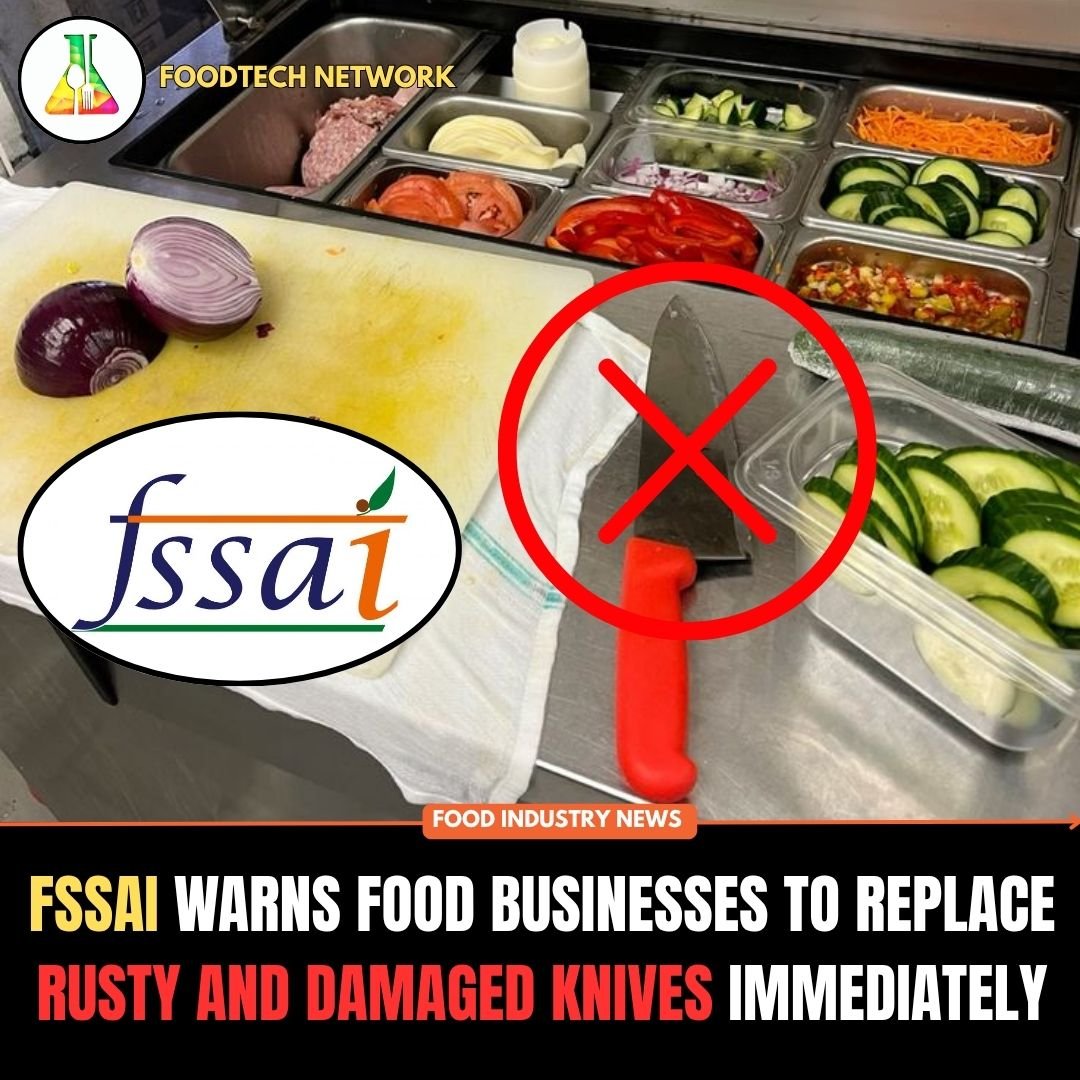
Food safety remains a growing concern in India as regulators strengthen enforcement measures to protect consumers. In its latest advisory, the Food Safety and Standards Authority of India (FSSAI) has instructed food businesses across the country to immediately stop using rusty, broken, chipped, or damaged knives and blades in kitchens and food-processing facilities.
The directive applies to restaurants, cafes, catering services, cloud kitchens, food manufacturers, and all food business operators (FBOs).
Why FSSAI Issued the Advisory
According to FSSAI, kitchen tools that come into direct contact with food must always be clean, food-grade, non-toxic, and properly maintained.
The regulator observed that several food establishments continue to use old and damaged cutting equipment, increasing the risk of physical, chemical, and microbial contamination.
Under Schedule 4 of the Food Safety and Standards (Licensing and Registration of Food Businesses) Regulations, 2011, all utensils and equipment used during food preparation, processing, packaging, and storage must be made from food-grade materials and maintained in hygienic condition.
FSSAI has instructed food safety commissioners and enforcement officials across states and union territories to closely monitor compliance and take appropriate action against violations.
Health Risks Associated With Rusty Knives
While rust is often considered a cosmetic issue, food safety experts warn that damaged metal surfaces can pose serious health risks.
When knives become rusty, their surfaces develop tiny pores and rough edges that can trap moisture, food particles, and harmful microorganisms. These conditions create an ideal environment for bacteria such as Salmonella and E. coli to thrive.
Even thorough washing may not completely eliminate bacteria hidden in microscopic crevices. Repeated use of contaminated knives can transfer pathogens to food, increasing the risk of foodborne illnesses.
Potential health risks include:
- Food poisoning
- Stomach infections
- Diarrhea
- Vomiting
- Digestive complications
Physical and Chemical Contamination Risks
Damaged knives can also introduce physical hazards into food.
Small metal fragments from chipped or broken blades may accidentally mix with food during preparation. If ingested, these fragments can cause injuries, choking hazards, or dental damage.
Similarly, rust particles, peeling coatings, or deteriorating surfaces can contaminate food and compromise its safety and quality.
Preventing contamination at the food preparation stage remains one of the most effective ways to protect public health.
What Food Businesses Should Do
To comply with FSSAI guidelines, food businesses should:
- Conduct regular inspections of knives and cutting tools.
- Remove and replace rusty, chipped, cracked, or damaged equipment immediately.
- Use only food-grade, non-toxic utensils and equipment.
- Clean and sanitize knives after every use.
- Store kitchen tools in clean, dry environments.
- Train staff on equipment maintenance and food hygiene practices.
- Maintain records of cleaning schedules and equipment replacement.
Regular maintenance not only improves food safety but also helps businesses comply with regulatory requirements.
Strict Monitoring and Enforcement
FSSAI has directed food safety officials nationwide to strengthen inspections and ensure compliance with the advisory.
Food businesses found using unsafe kitchen equipment may face penalties and other regulatory action under applicable food safety laws.
The regulator has reiterated that food safety cannot be compromised and that maintaining hygienic equipment is essential to protecting consumer health.
As India continues to tighten food safety standards, businesses must proactively upgrade their hygiene practices and ensure that all equipment used in food handling meets regulatory requirements.
📢 Be Aware, We never charge any consultancy fee for jobs.
📲 Foodtech Network WhatsApp Jobs Group
Click to join the WhatsApp group
👥Free Membership (For Jobs, Internship and Training)
Membership registration
⚙️ Food Entrepreneurs & Startups (For business owners)
Our services (Free and Paid)
📱 Food safety training and certification.
Check our training portal and enroll now