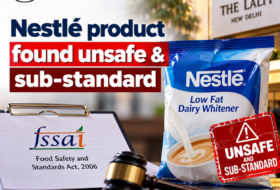
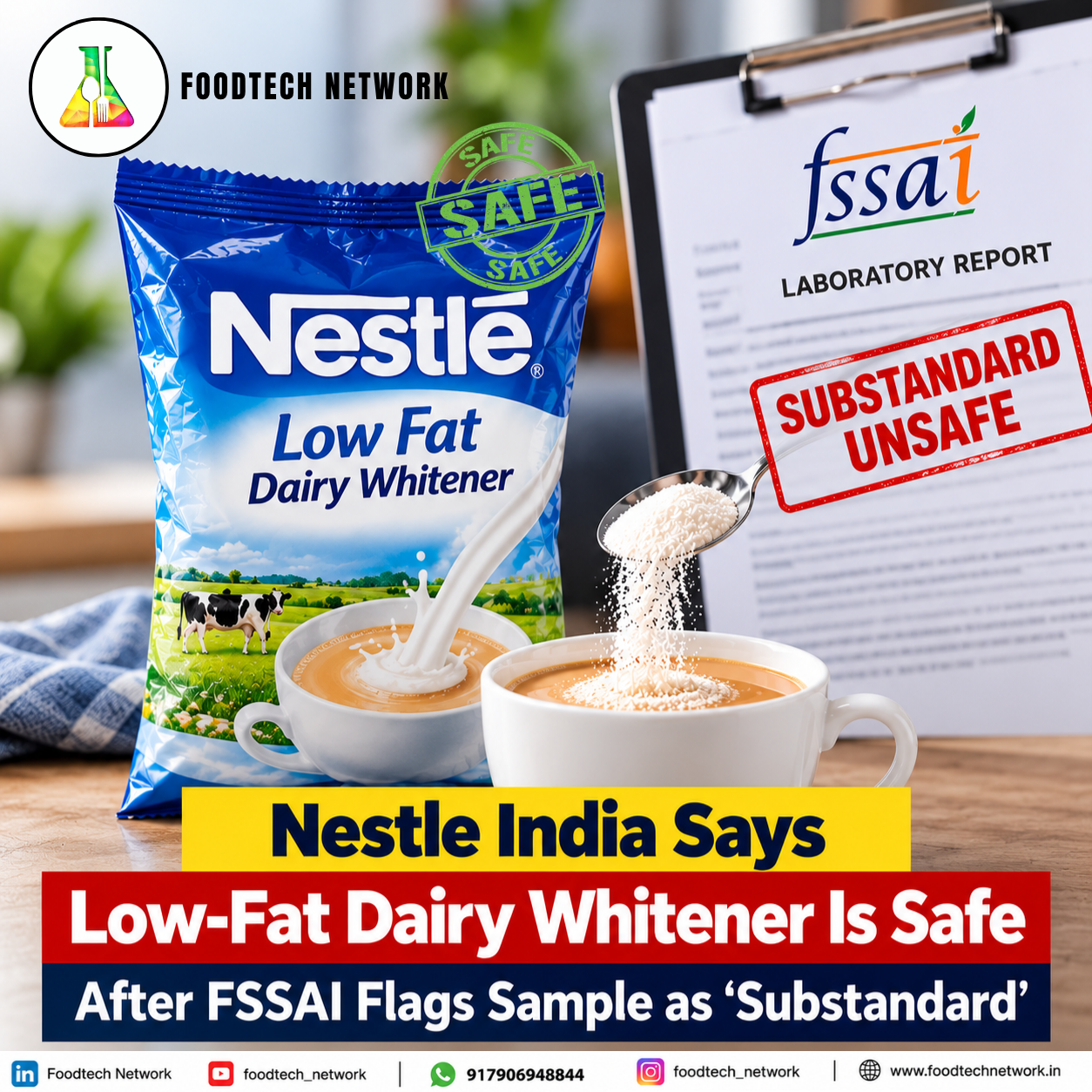
Nestle India has said its low-fat dairy whitener is safe to consume and complies with applicable food safety regulations, following a laboratory report cited by the Food Safety and Standards Authority of India (FSSAI) that classified a sample as “substandard” and “unsafe.”
The sample was collected from the premises of Bharat Hotels Ltd, which operates The Lalit hotel at Connaught Place in New Delhi. According to FSSAI’s disclosure, the laboratory report found the product non-compliant under the Food Safety and Standards Act, 2006.
Nestle India Responds
Nestle India disputed the interpretation of the laboratory findings, particularly regarding phosphorus levels in the product.
The company said laboratory testing measured total phosphorus against a limit prescribed for added phosphorus without adequately accounting for the naturally occurring phosphorus present in milk-based ingredients.
Nestle India said phosphorus is naturally present in milk and therefore occurs in milk-based products. The company maintained that its product complies with the prescribed limits for added phosphorus under the Food Safety and Standards Regulations, including on an as-consumed basis.
The company also said it has been engaging with authorities through the due process and has shared data from similar milk-based products to demonstrate the presence of naturally occurring phosphorus in the category.
FSSAI Action
FSSAI said the laboratory report was shared with the concerned food business operator, Bharat Hotels Ltd, and a notice was issued regarding the non-compliant product.
The food business operator was directed to immediately stop selling the product and was given the opportunity to appeal against the laboratory findings within the prescribed period.
What The Report Says
Importantly, FSSAI’s disclosure does not specify the exact parameter on which the sample failed.
The matter therefore involves a regulatory finding against the sampled product, while Nestle India maintains that its product is safe and compliant and has challenged the interpretation of the phosphorus results.
The case highlights the importance of distinguishing between naturally occurring nutrients in milk-based products and added substances when assessing regulatory compliance.
📢 Be Aware, We never charge any consultancy fee for jobs.
📲 Foodtech Network WhatsApp Jobs Group
Click to join the WhatsApp group
👥Free Membership (For Jobs, Internship and Training)
Membership registration
⚙️ Food Entrepreneurs & Startups (For business owners)
Our services (Free and Paid)
📱 Food safety training and certification.
Check our training portal and enroll now