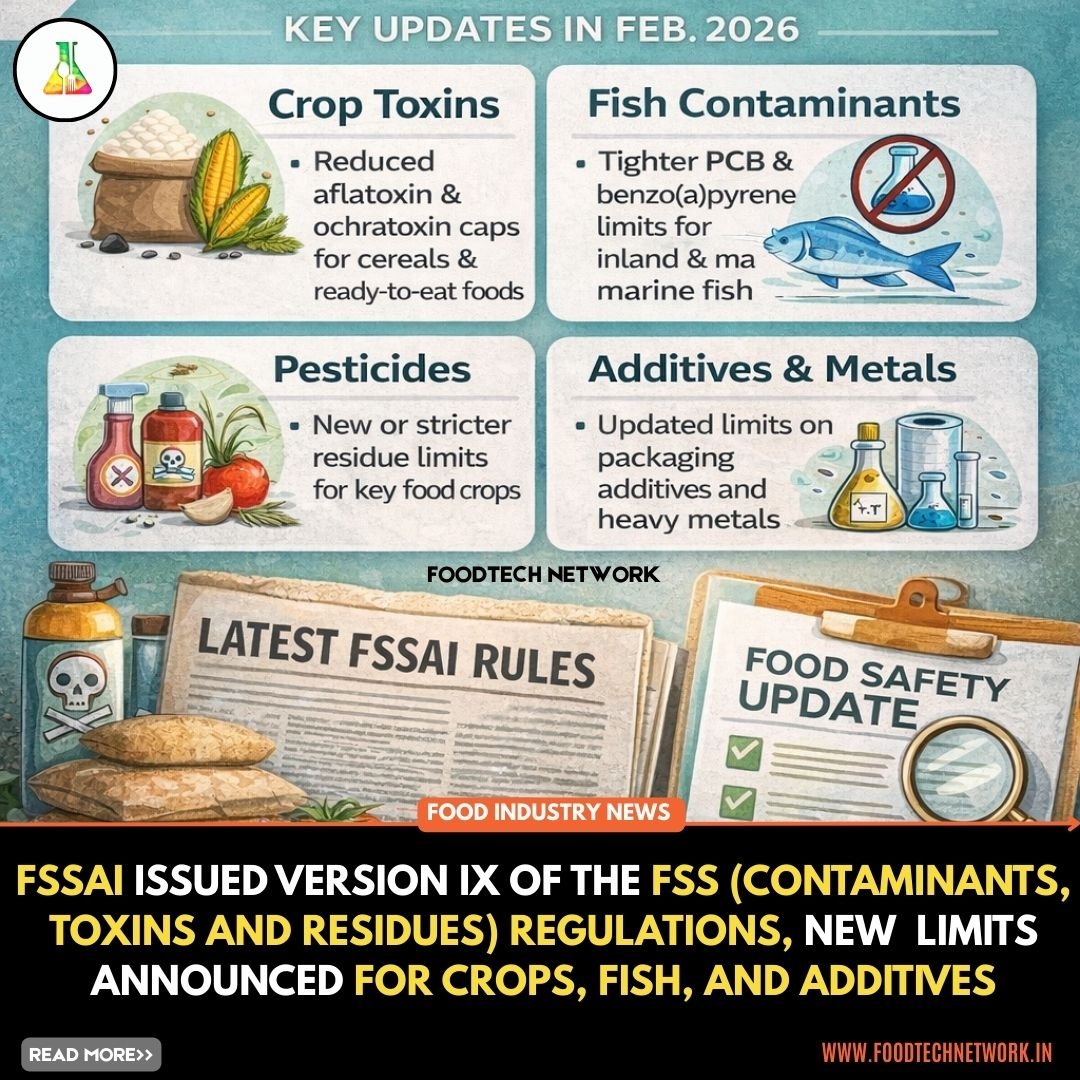
India’s food regulator has formally issued Version IX of the Food Safety and Standards (Contaminants, Toxins and Residues) Regulations, tightening limits on toxins, pesticide residues, heavy metals, and packaging-related additives across hundreds of food categories
The amended compendium—dated 3 February 2026—is aimed at strengthening consumer protection and aligning domestic standards more closely with evolving scientific risk assessments.
🔍 Tighter Caps on Crop Toxins
One of the most significant changes is in mycotoxin control. The updated tables revise maximum limits for:
- Total aflatoxins across cereals, pulses, oilseeds, nuts, and ready-to-eat foods.
- Aflatoxin B1 in staples and spices.
- Aflatoxin M1 in milk and milk powders.
- Ochratoxin A in wheat, barley, rye and coffee.
- Patulin in apple juice and beverages using apple juice as an ingredient.
These revised ceilings are designed to reduce long-term exposure risks from contaminated grains and processed foods
🌿 New Limits for Naturally Occurring Toxins
For the first time in several categories, FSSAI has also laid out specific thresholds for naturally occurring toxic substances, including:
- Agaric acid in mushroom-based foods and alcoholic beverages.
- Hydrocyanic acid in products such as sago, cassava flour and stone-fruit preparations.
- Hypericine and safrole in beverages, spices and meat or fish preparations.
These updates expand regulatory oversight beyond synthetic contaminants to naturally present hazards in traditional foods
🐟 Fish Products Face Stricter Monitoring
Seafood has come under sharper scrutiny in the amended rules:
- Polychlorinated biphenyls (PCBs) now carry different caps for inland fish and marine species.
- Benzo(a)pyrene, a carcinogenic compound formed during smoking processes, has a defined maximum level for smoked fishery products.
The move reflects growing regulatory focus on industrial pollutants and processing-related contaminants in aquatic foods
🌱 Revised Pesticide Residue Limits
A major section of the notification revises Maximum Residue Limits (MRLs) for dozens of insecticides and fungicides—covering crops such as:
- Rice and wheat
- Tomatoes, onions, chilies and grapes
- Citrus fruits and mangoes
- Milk, meat and poultry products
Chemicals including acephate, chlorpyrifos, dimethoate, malathion, and monocrotophos feature among those with updated or reaffirmed residue ceilings, requiring farmers and processors to reassess spray practices and sourcing controls
📦 Packaging Additives and Metals Also Updated
Version IX also revises limits for several food additives and contaminants linked to packaging or processing, such as:
- Titanium dioxide
- Sodium alginate
- Propyl gallate
- Preservatives, colour preparations and emulsifiers
In addition, tables on heavy metals—including lead, arsenic, cadmium, mercury, nickel and tin—have been updated across canned foods, beverages, oils, infant foods and drinking water categories
📌 What the Changes Mean for Industry
The sweeping amendments are expected to have a direct impact on:
- FMCG and food-processing companies
- Agricultural exporters
- Testing laboratories
- QA and regulatory-affairs teams
Experts say businesses will need to conduct fresh gap analyses, update supplier specifications, revise testing plans and—where necessary—reformulate products to meet the tighter benchmarks.
📢 Be Aware, We never charge any consultancy fee for jobs.
📲 Foodtech Network WhatsApp Jobs Group
Click to join WhatsApp group
👥Free Membership (For Jobs, Internship and Training)
Membership registration
⚙️ Food Entrepreneurs & Startups (For business owners)
Our services (Free and Paid)
📱 Food safety training and certification.
Download our App, Foodtech Network