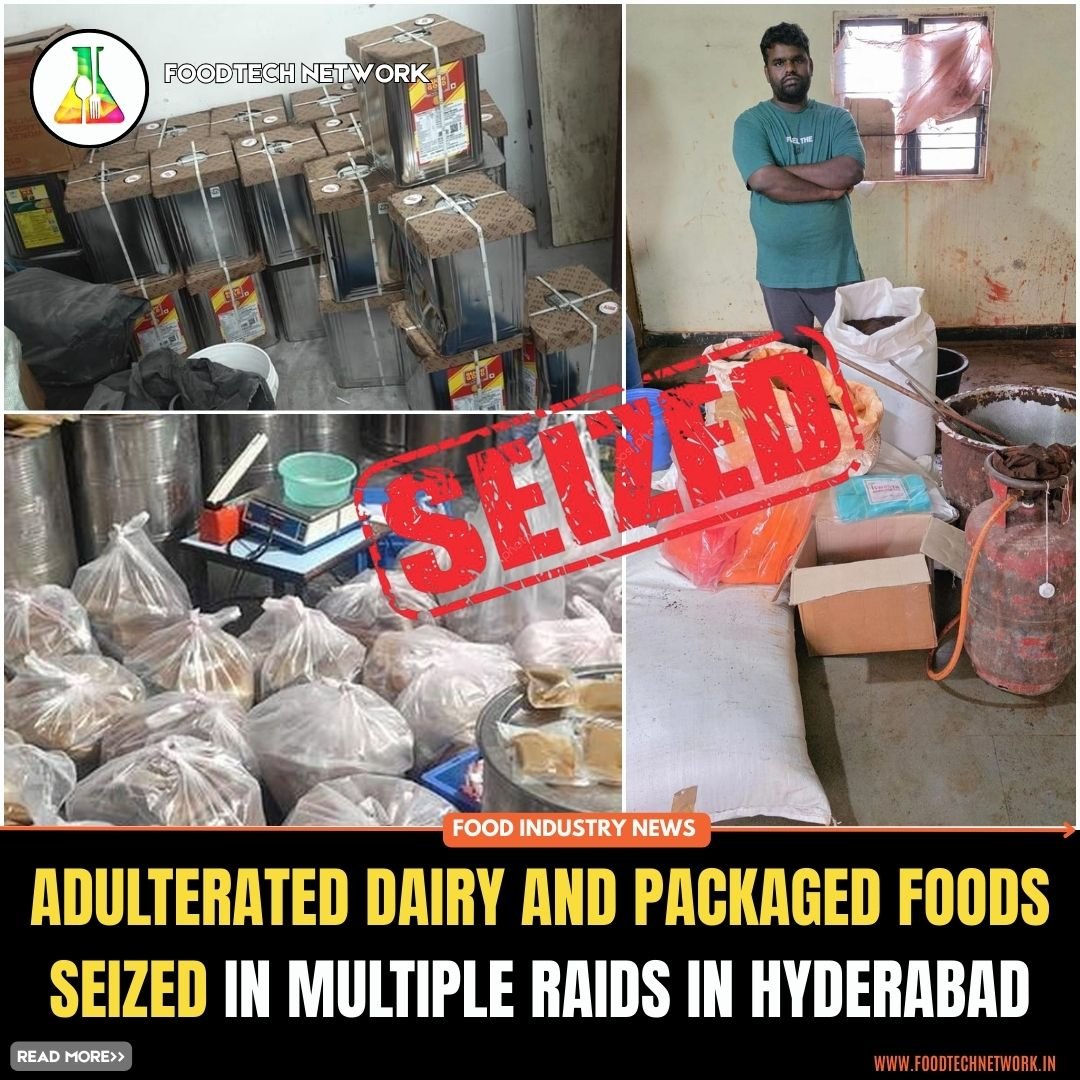
Authorities in Hyderabad have intensified their crackdown on food adulteration, conducting a series of raids that uncovered illegal food manufacturing units operating in unhygienic conditions. The operations, carried out by the Commissioner’s Task Force, local police, and food safety officials, have led to the seizure of thousands of kilograms of raw materials and hundreds of kilograms of adulterated food products.
How the Raids Begin
According to officials, these operations typically start with tip-offs from informers, residents, or suspicious customers. After receiving information, police first verify the claims through decoy operations.
Officers pose as regular customers, purchasing suspected products and casually questioning shopkeepers to trace their source of production or storage locations. Once the manufacturing unit or godown is identified, authorities plan a coordinated raid.
Inspector N. Ranjith Kumar Goud from the newly formed Anti-Food Adulteration Wing said this method helps authorities locate hidden units where adulterated products are produced.
Unhygienic Conditions and Illegal Production
Many of the illegal units discovered during the raids were operating in small rooms in residential areas, often in extremely poor sanitary conditions. Officials reported finding:
- Stacks of plastic containers and sacks of raw materials on dirty floors
- Poor ventilation with strong smells of oils and spices
- Grimy containers and finished food products exposed to dust and flies
Authorities described some of the premises as places where no consumer would want to see their food being prepared.
Major Busts in Hyderabad
Recent raids uncovered several adulteration operations, including:
- A fake dairy products unit operating under the name “Pride Dairy” in Bhola Nagar near Road No. 12, Banjara Hills
- An adulterated ginger–garlic paste manufacturing unit near the railway gate in MS Maqtha
- A case where a man adulterated tea powder using synthetic chemicals and supplied it to local vendors
In one dairy raid, manufacturers admitted they were mixing vanaspati oil to produce fake ghee to meet the increased demand during Ramzan, as pure ghee requires longer production time.
Evidence Collection and Testing
During the raids, officers carefully document the premises through photographs and videos before seizing raw materials, finished goods, and equipment. Food samples are then sent to the Forensic Science Laboratory (FSL) for testing to confirm adulteration.
Rising Consumer Concerns
The recent busts have raised concerns among residents about the safety of everyday packaged food items.
Some households have started preparing food products like ginger–garlic paste, paneer, and ghee at home instead of relying on packaged alternatives. Many consumers say they are now more cautious when purchasing processed foods from the market.
Strengthening Food Safety Surveillance
Authorities say these operations are part of an ongoing effort by Anti-Food Adulteration Surveillance Teams to track illegal food manufacturing and protect public health. Officials have urged citizens to report suspicious products or manufacturing activities to help curb food adulteration in the city.
📢 Be Aware, We never charge any consultancy fee for jobs.
📲 Foodtech Network WhatsApp Jobs Group
Click to join WhatsApp group
👥Free Membership (For Jobs, Internship and Training)
Membership registration
⚙️ Food Entrepreneurs & Startups (For business owners)
Our services (Free and Paid)
📱 Food safety training and certification.
Download our App, Foodtech Network