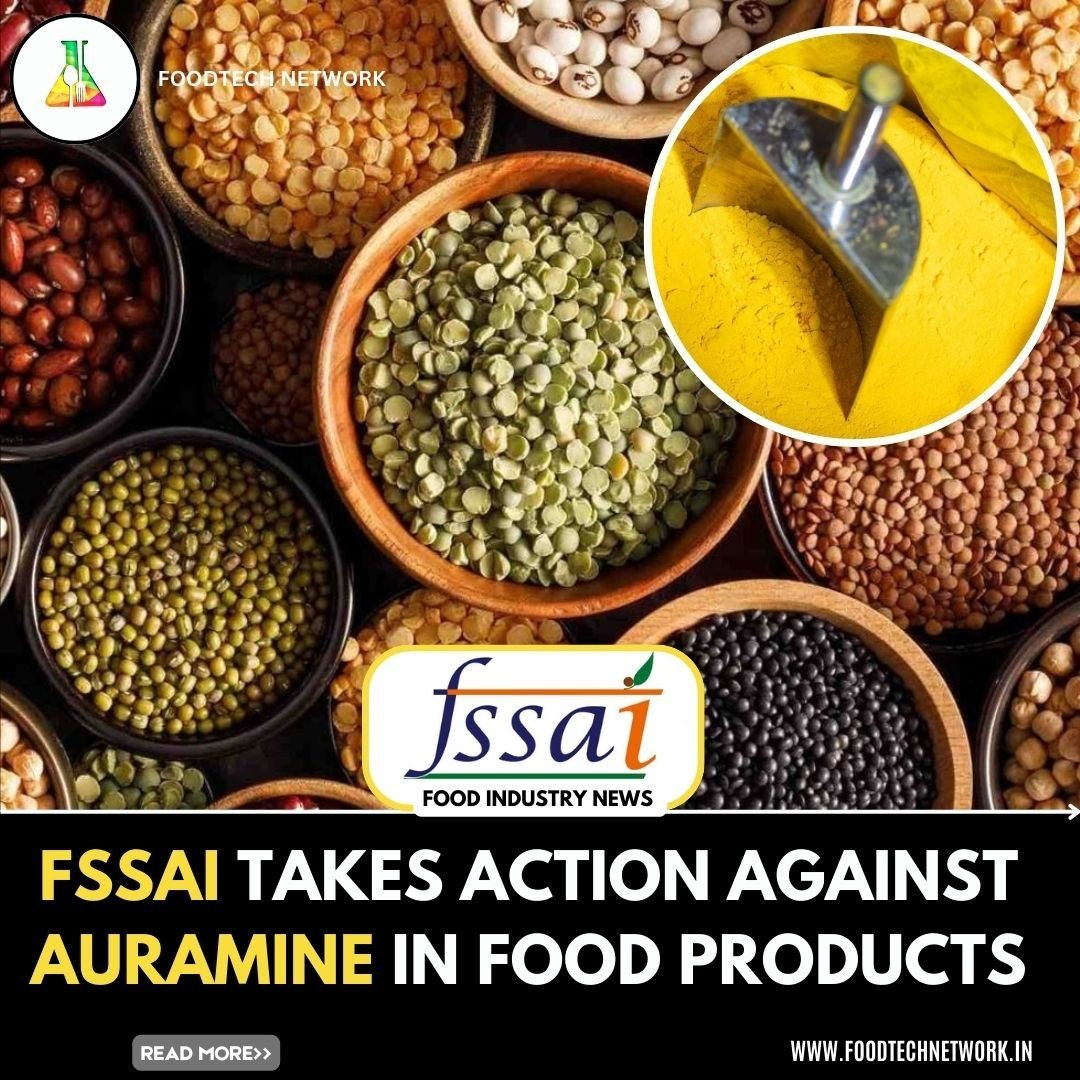
The Food Safety and Standards Authority of India (FSSAI) has launched a nationwide action to stop the illegal use of Auramine, a dangerous industrial dye found in roasted chana and other food items. The move aims to protect consumers from harmful chemical contamination and strengthen food safety across the country.
1. What Exactly Is Auramine?
Auramine is a synthetic yellow dye that is not permitted for food use under the Food Safety and Standards (Food Product Standards and Food Additives) Regulations, 2011.
It is meant only for industrial purposes such as:
- Textile dyeing
- Leather processing
- Paper manufacturing
Its presence in food products is completely illegal and unsafe.
2. Why Is Auramine Dangerous?
Health experts have raised alarms because Auramine has been associated with severe long-term health risks.
Studies by the International Agency for Research on Cancer (IARC) link the dye to:
- Liver cancer
- Kidney cancer
- Bladder cancer
- Potential neurological damage
Despite this, some vendors use Auramine to give foods an artificial golden-yellow shine, making them look fresher or more appealing.
3. FSSAI’s Nationwide Enforcement Drive
Using powers under Section 16(5) of the Food Safety and Standards Act, 2006, FSSAI has ordered all State and Union Territory food safety commissioners to:
- Launch targeted inspections in factories, warehouses, and retail markets
- Test suspect samples in NABL-accredited labs
- Seize and destroy contaminated products
- Take strict legal action against violators
Four specialized laboratories have been assigned for uniform testing and accurate detection of Auramine in food samples.
4. Legal Consequences for Violators
Food business operators caught using Auramine face:
- Cancellation of FSSAI license
- Heavy penalties
- Up to seven years of imprisonment for repeat offenses
Any product containing Auramine is automatically classified as unsafe and unfit for consumption.
5. What Consumers Should Watch For
To stay safe, consumers should be alert when buying roasted chana and similar items:
- Natural roasted chana has a dull brown color
- Bright, shiny, unnatural yellow tones may signal adulteration
- If the color rubs off on your fingers, it’s a clear warning sign
Being aware can help consumers avoid toxic products and support a cleaner, safer food ecosystem.

📢 Be Aware, We never charge any consultancy fee for jobs.
📲 Foodtech Network WhatsApp Jobs Group
Click to join WhatsApp group
👥Free Membership (For Jobs, Internship and Training)
Membership registration
⚙️ Food Entrepreneurs & Startups (For business owners)
Our services (Free and Paid)
📱 Food safety training and certification.
Download our App, Foodtech Network