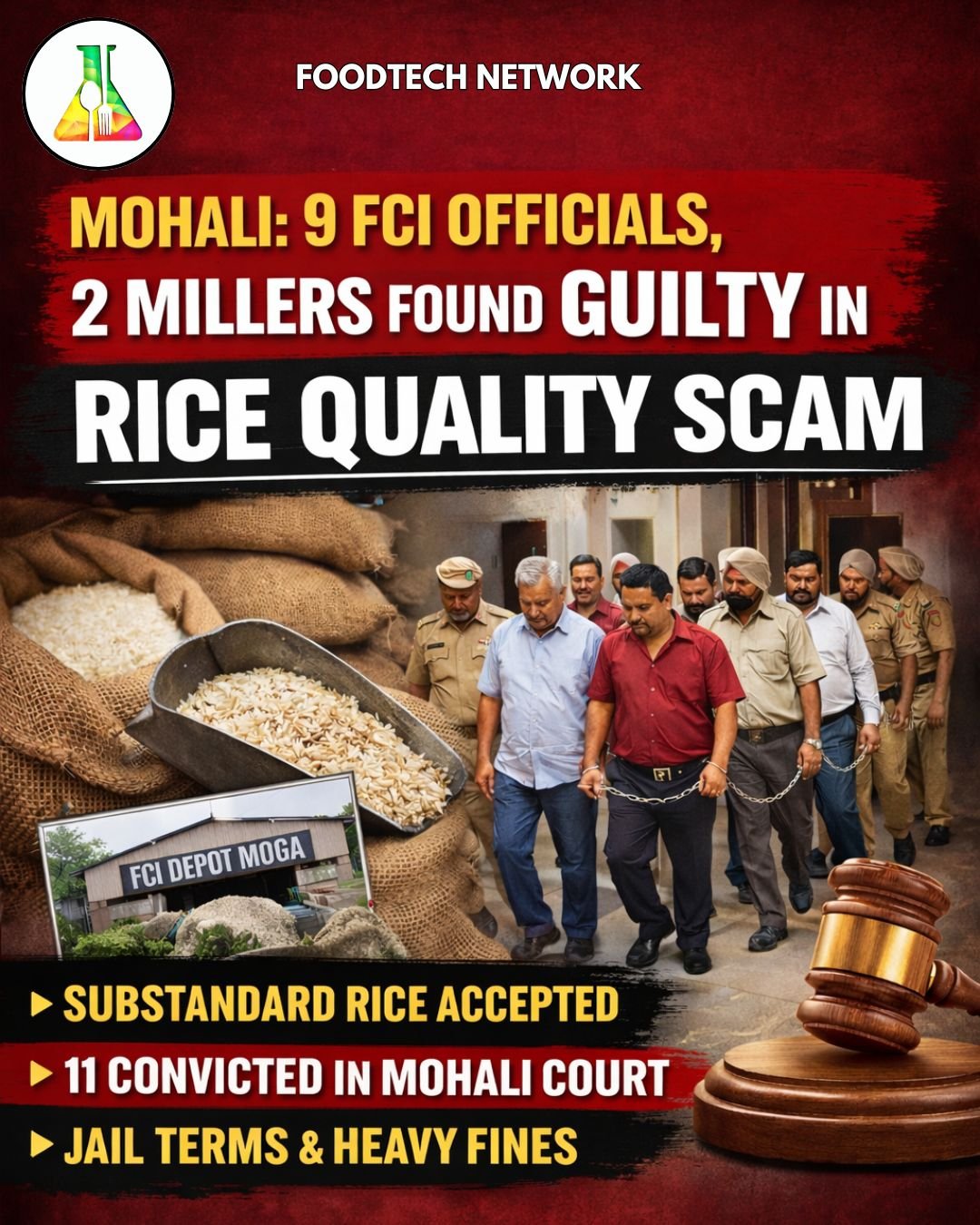
In a significant judgment highlighting accountability in public food procurement, a special CBI court in Mohali has convicted nine officials of the Food Corporation of India (FCI) along with two private rice millers for their involvement in accepting substandard rice during the 2004–05 kharif procurement season.
The court, presided over by Special Judge Baljinder Singh Sra, found that the accused officials colluded with private millers to falsely classify inferior rice as A-grade quality. This malpractice led to wrongful payments and substantial financial loss to the public exchequer.
How the Scam Was Uncovered
The case traces back to a surprise inspection conducted on September 29, 2005, at the Moga depot (then in Faridkot district). A joint team comprising CBI officials, FCI technical staff, and independent witnesses collected 46 rice samples from various storage stacks.
Laboratory analysis by the Central Grain Analysis Laboratory revealed shocking results:
- None of the samples met prescribed quality standards
- Nine stacks were declared unfit for human consumption
Convictions and Sentences
The court convicted nine FCI officials working in quality control and technical roles, sentencing them to:
- 1 year rigorous imprisonment + ₹5,000 fine under Section 120-B IPC
- 3 years rigorous imprisonment + ₹15,000 fine under Section 420 IPC (read with Section 34)
- 3 years rigorous imprisonment + ₹10,000 fine under the Prevention of Corruption Act
Two private millers were also convicted:
- Govinder Singh (Punjab Rice & General Mills, Moga)
- Pardeep Bansal (R P Agro Industries)
They were sentenced to:
- 1 year rigorous imprisonment + ₹5,000 fine under Section 120-B IPC
- 3 years rigorous imprisonment + ₹25,000 fine under Section 420 IPC
Acquittals and Case Developments
The court acquitted five individuals due to lack of evidence. Meanwhile:
- Proceedings against some accused were quashed earlier by the Punjab and Haryana High Court
- Cases against two individuals were closed due to their death during trial
Why This Case Matters
This case underscores serious lapses in food quality monitoring and corruption within procurement systems. Accepting substandard rice not only causes economic losses but also raises concerns about food safety and public health.
The judgment sends a strong message about the importance of transparency and strict quality control in India’s food procurement system, especially in agencies responsible for feeding millions.
📢 Be Aware, We never charge any consultancy fee for jobs.
📲 Foodtech Network WhatsApp Jobs Group
Click to join WhatsApp group
👥Free Membership (For Jobs, Internship and Training)
Membership registration
⚙️ Food Entrepreneurs & Startups (For business owners)
Our services (Free and Paid)
📱 Food safety training and certification.
Download our App, Foodtech Network