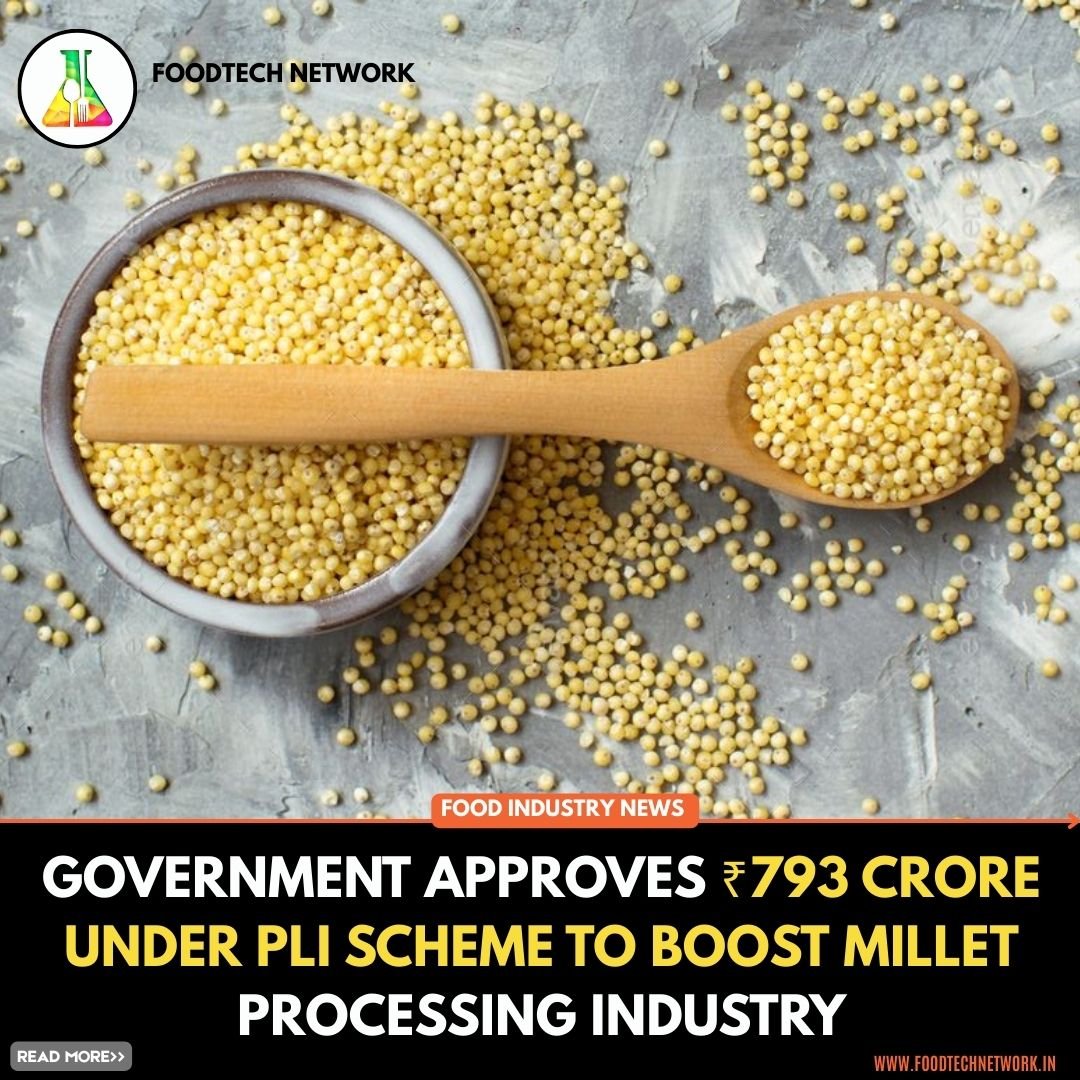
The Government of India is accelerating the growth of millet-based food processing through multiple flagship schemes led by the Ministry of Food Processing Industries (MoFPI). According to information shared in the Lok Sabha, the government has approved ₹793.27 crore under the Production Linked Incentive Scheme for Food Processing Industry (PLISFPI) to promote millet-based products and strengthen the millet value chain across the country.
The initiatives are being implemented through three major schemes — Pradhan Mantri Kisan SAMPADA Yojana (PMKSY), Production Linked Incentive Scheme for Food Processing Industry (PLISFPI), and the PM Formalization of Micro Food Processing Enterprises (PMFME) Scheme — all aimed at enhancing processing infrastructure, supporting entrepreneurs, and increasing value addition to millets.
₹793 Crore Approved Under PLI Scheme for Millet-Based Products
A dedicated component of the PLI scheme focuses on Millet-Based Products (MBP) with a total outlay of ₹800 crore. The scheme aims to increase the use of millets in processed food products and encourage their manufacturing for both domestic and export markets.
So far, the government has approved ₹793.27 crore for 29 companies, including:
- 8 large food processing companies
- 21 small and medium enterprises (SMEs)
The incentives are provided only when the entire manufacturing value chain takes place within India, ensuring stronger domestic production and supply chains.
Millet Product Sales Rise to ₹814 Crore
The scheme has already shown significant impact in boosting the millet economy.
Sales of millet-based products by approved beneficiaries have grown sharply:
- ₹35 crore in 2020–21
- ₹814 crore in 2024–25
Millet procurement has also increased dramatically:
- 1,092 metric tonnes in 2020–21
- 16,130 metric tonnes in 2024–25
This growth reflects increasing demand for millet-based foods and the success of government incentives in scaling production.
PMFME Scheme Supports 4,612 Micro Food Processing Units
Under the PM Formalization of Micro Food Processing Enterprises (PMFME) Scheme, millets have been identified as One District One Product (ODOP) in 21 districts across India.
To promote millet entrepreneurship and support small-scale processors:
- 4,612 micro food processing enterprises have been approved
- A total subsidy of ₹91.20 crore has been sanctioned for millet processing units
These initiatives primarily support micro entrepreneurs, start-ups, self-help groups (SHGs), and farmer producer organisations (FPOs) involved in millet-based food products.
Millet Mahotsavs Organized to Promote Entrepreneurship
As part of the International Year of Millets (IYoM) 2023, the government organised Millet Mahotsavs in 30 districts across various States and Union Territories.
These events helped:
- Promote millet-based food innovation
- Encourage food start-ups and micro-enterprises
- Increase awareness about the nutritional benefits of millets
They also created market opportunities for local millet processors and entrepreneurs.
Branding and Marketing Support for Millet Products
The government is also strengthening the branding and marketing ecosystem for millet-based products under the PMFME scheme.
Support is provided to:
- Farmer Producer Organisations (FPOs)
- Self Help Groups (SHGs)
- Cooperatives
- Special Purpose Vehicles (SPVs) of micro food processing enterprises
The scheme helps them develop common branding, packaging, quality control systems, and food safety compliance to enable retail sale of millet products in domestic markets.
Infrastructure Support Under PMKSY
Under the Creation/Expansion of Food Processing & Preservation Capacities (CEFPPC) component of PMKSY, one millet processing unit has also been approved to enhance processing infrastructure in the sector.
Government’s Vision for the Millet Economy
With rising global demand for healthy grains and India being one of the largest millet producers, the government aims to position millets as a key segment in the food processing industry.
By supporting large manufacturers, SMEs, and micro food entrepreneurs simultaneously, these schemes are expected to:
- Boost millet value addition
- Create rural employment
- Strengthen farmer incomes
- Expand export opportunities for millet-based foods
The information was shared by Ravneet Singh Bittu in a written reply in the Lok Sabha.
📢 Be Aware, We never charge any consultancy fee for jobs.
📲 Foodtech Network WhatsApp Jobs Group
Click to join WhatsApp group
👥Free Membership (For Jobs, Internship and Training)
Membership registration
⚙️ Food Entrepreneurs & Startups (For business owners)
Our services (Free and Paid)
📱 Food safety training and certification.
Download our App, Foodtech Network