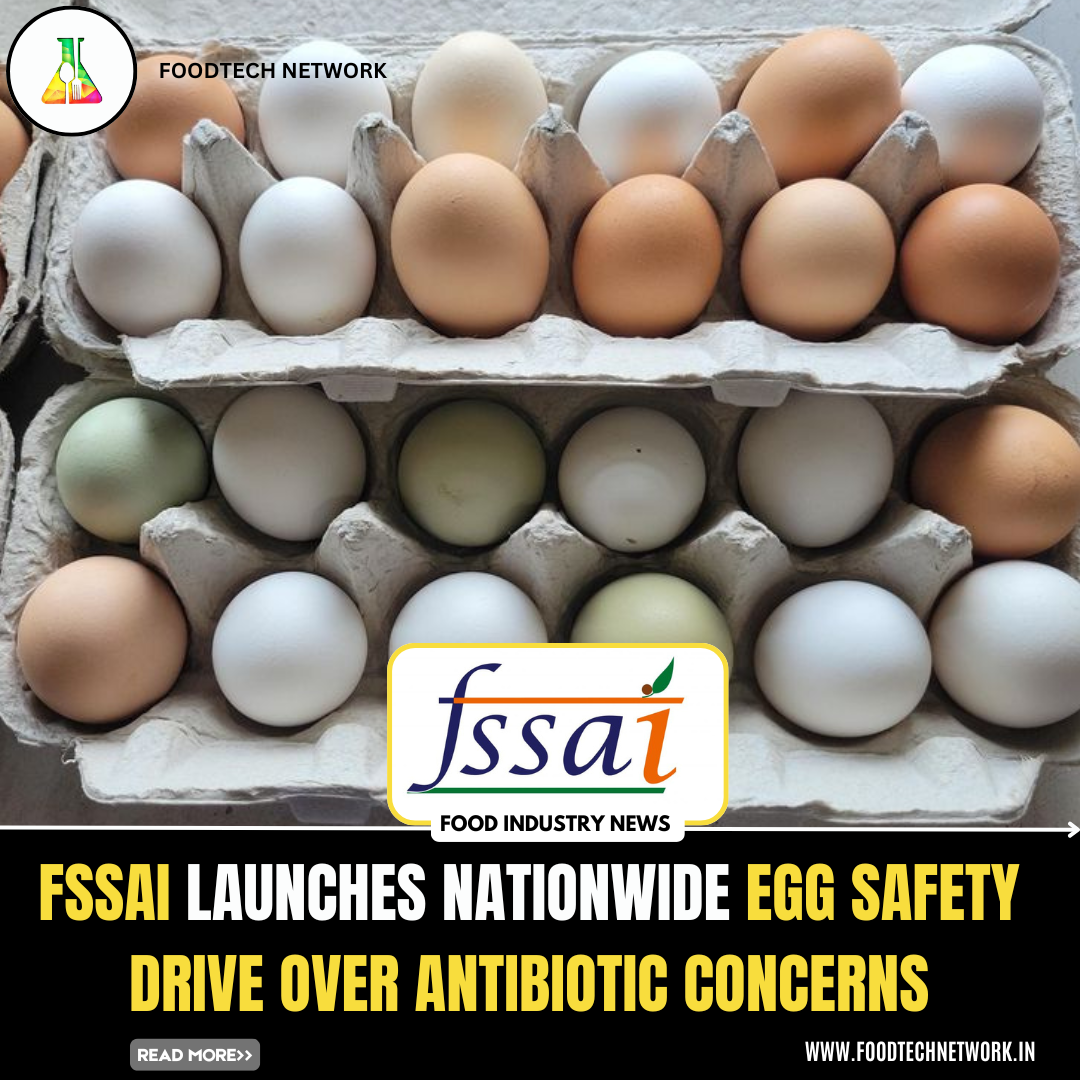
India’s food safety regulator, the Food Safety and Standards Authority of India (FSSAI), has launched a nationwide surveillance and enforcement drive to test eggs across the country after concerns were raised over the presence of banned antibiotics.
The move comes after a viral social media video claimed that samples of a premium egg brand contained traces of AOZ (Amino-Oxazolidinone)—a metabolite linked to nitrofuran antibiotics, which are banned for use in food-producing animals in India due to potential cancer risks.
What FSSAI Is Doing
FSSAI has directed food safety officers to collect samples of both branded and unbranded eggs from markets and poultry supply chains. These samples are being tested at 10 authorised laboratories across India.
The testing focuses on detecting nitrofuran metabolites, ensuring residues remain within the strict safety limit of 1 microgram per kilogram, as prescribed by food safety standards.
Officials said that monitoring unbranded eggs poses a bigger challenge, as they are often sold through local shops and informal channels without clear information about their origin.
Eggoz Responds to Allegations
The controversy began after a YouTube channel alleged that eggs from the premium brand Eggoz contained traces of AOZ. The claim quickly gained attention online, sparking questions around food safety, brand transparency, and regulatory oversight.
In response, Nupa Technologies Pvt. Ltd., the Gurugram-based company behind Eggoz, rejected the allegations. The company released NABL-accredited lab reports dated December 11, stating that its eggs comply with all FSSAI standards.
According to the company, tests showed no presence of banned antibiotics, pesticides, heavy metals, toxic residues, or microbiological contaminants.
In a statement shared with Mint on December 14, a company spokesperson said Eggoz follows strict quality control and traceability across its entire supply chain.
Why This Matters
Eggs are a major protein source in India, with the market currently valued at $7–8 billion and expected to grow beyond $19 billion by 2034, according to industry estimates.
Global studies have linked prolonged exposure to nitrofuran residues like AOZ to potential carcinogenic effects, prompting regulators worldwide to enforce zero-tolerance or extremely low residue limits.
FSSAI’s ongoing testing drive aims to ensure consumer safety, maintain trust in the food system, and prevent contaminated products from entering the food chain.
📢 Be Aware, We never charge any consultancy fee for jobs.
📲 Foodtech Network WhatsApp Jobs Group
Click to join WhatsApp group
👥Free Membership (For Jobs, Internship and Training)
Membership registration
⚙️ Food Entrepreneurs & Startups (For business owners)
Our services (Free and Paid)
📱 Food safety training and certification.
Download our App, Foodtech Network